Wildlife

A nursery, a flyway, and a working marsh

Shallow water, grass beds, and marsh edge make this bay far more crowded than it looks. Most of what lives here spends part of its life somewhere else, which is why the whole shoreline matters.

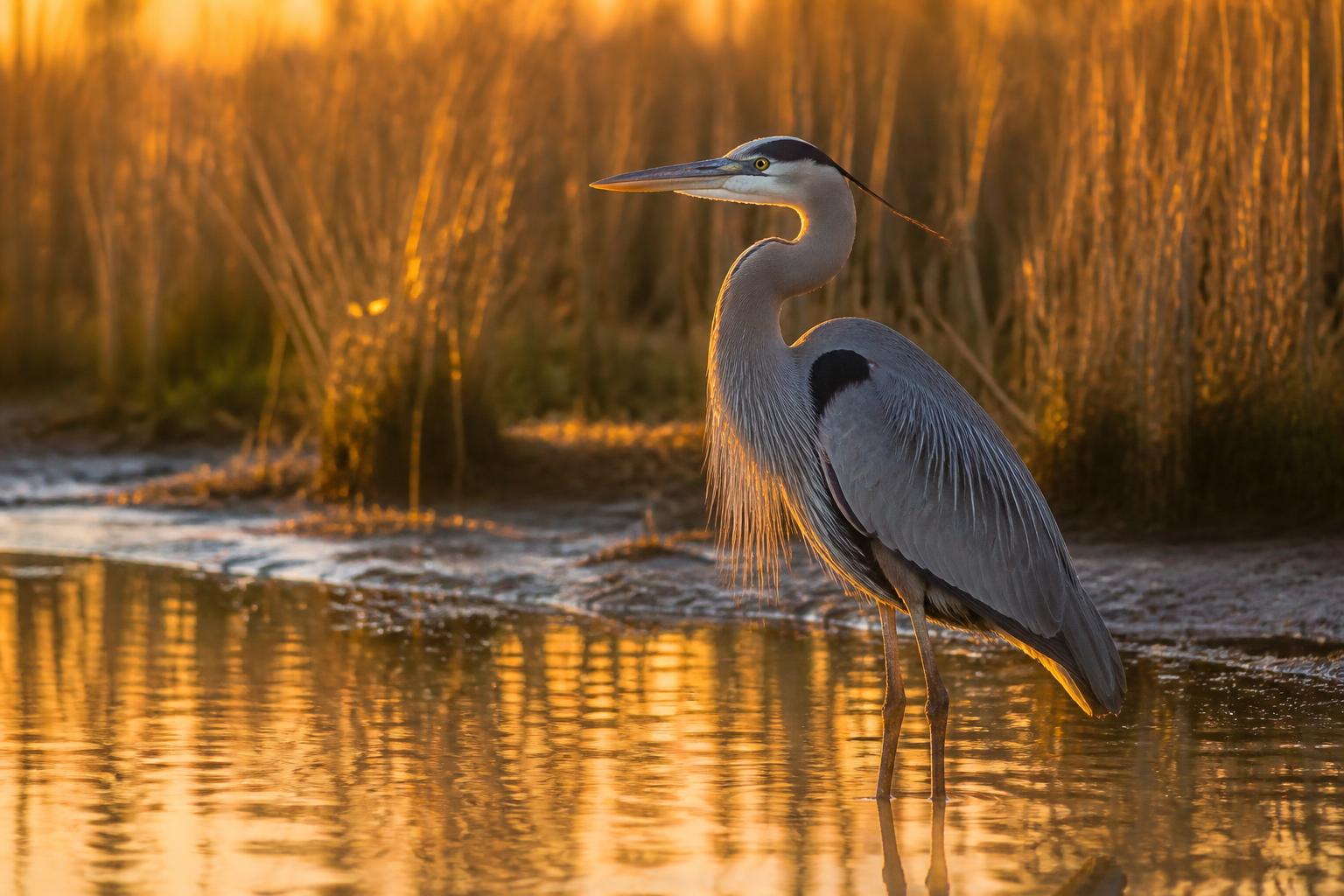
Great blue heron standing in a golden tidal marsh at sunrise

In the water

  • Blue crab

    The bay's signature animal. Young crabs shelter in underwater grass beds; adults move to deeper water as it cools.

  • Striped bass (rockfish)

    Spawns in the fresher upper reaches each spring, then spreads through the bay to feed.

  • Eastern oyster

    A reef builder and a filter. Restored reefs also give small fish structure to hide in.

  • Diamondback terrapin

    A brackish-water turtle that nests on sandy shoreline above the high-tide line.

In the air

  • Osprey

    Returns in March, nests on channel markers and pilings, and fishes the shallows all summer.

  • Great blue heron

    Hunts the marsh edge year-round, standing still in inches of water.

  • Bald eagle

    Common again along wooded shorelines, often perched high over open water.

  • Canvasback and other ducks

    Winter visitors that raft offshore and feed on grass beds and shellfish.

Along the edge

  • Smooth cordgrass

    Holds the shoreline together in the wettest zone and buffers wave energy.

  • Saltmeadow hay

    Grows just above the daily tide line and shelters nesting marsh birds.

  • Wild celery and eelgrass

    Underwater grasses that oxygenate the shallows and feed wintering waterfowl.

  • Loblolly pine and marsh oak

    The upland fringe that shades creeks and slows runoff before it reaches the water.

What to look for, when

Spring

Shad and herring push up the creeks, ospreys rebuild nests, and marsh grass greens up. Best month for birdsong at dawn.

Summer

Crabbing season. Watch for terrapin nests on sandy banks and avoid running boats over shallow grass beds.

Autumn

Rockfish feed hard, marsh turns copper, and migrating shorebirds stop over on the flats.

Winter

Ducks and eagles are easiest to see. Clear, low-algae water makes the shallows unusually legible.

Watching without disturbing

  • Keep well clear of nesting platforms and marsh-bird cover.
  • Idle through the shallows; propellers tear up grass beds.
  • Walk below the wrack line, not through dune or marsh grass.
  • Leave terrapins, horseshoe crabs, and nests where they are.