History
Four centuries of tobacco, oysters, and tides
Every landing, creek name, and leaning barn along this bay is a record of how people made a living from soil and salt water. The story is not tidy, and it is worth knowing before you walk the shoreline.
Before the colonies
A shoreline of fish weirs and oyster middens
Algonquian-speaking communities lived along these creeks for thousands of years, moving with the seasons: shad and herring runs in spring, oysters in cold months, corn and beans on the higher ground. Shell middens along the banks are still the oldest record the shoreline keeps.
1600s – 1700s
Tobacco takes the high ground
Colonial settlement organized itself around tobacco. Fields were cleared to the water's edge, hogsheads were rolled down to private landings, and ships loaded straight from the bank. The crop paid for the plantations and, in southern Maryland, was worked largely by enslaved people whose labor built the landscape visitors admire today.
1800s
Oysters, tonging, and sail
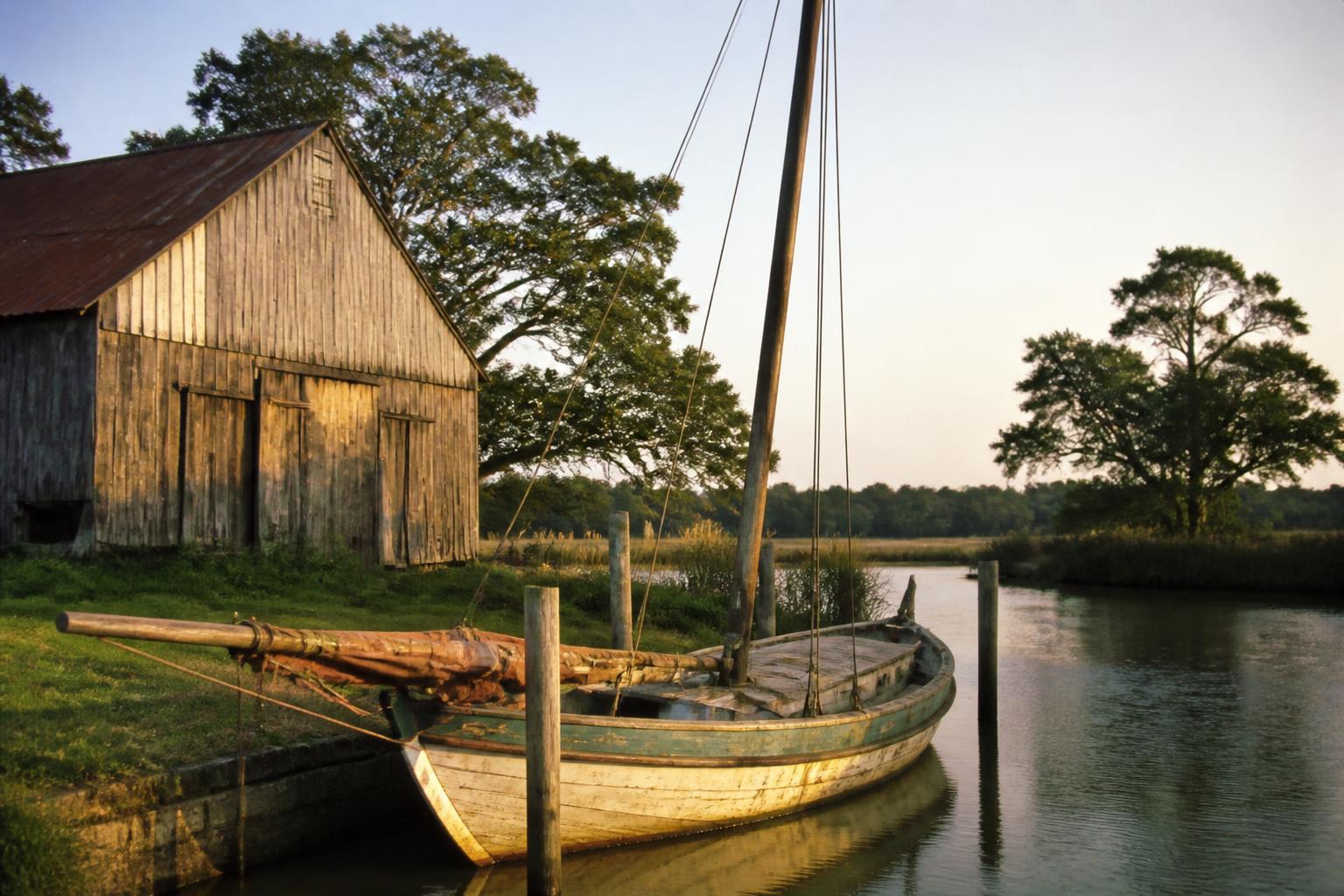
As tobacco soils wore out, the water became the economy. Skipjacks and bugeyes dredged under sail, tongers worked from small boats, and packing houses shipped barrels to northern cities. Steamboat landings turned quiet creeks into weekly stops for freight, mail, and passengers.
1900s
Roads, decline, and reckoning
Bridges and highways ended the steamboat era, and by mid-century the oyster reefs were a fraction of what they had been. Nutrient runoff from farms and new suburbs clouded the water, underwater grasses thinned, and summer dead zones became routine.
Today
A working shoreline, slowly recovering
Watermen still crab and fish here alongside restoration crews planting marsh grass and seeding oyster reefs. Grass beds have returned in patches. The bay is not what it was in 1850, and it is measurably better than it was in 1985.
Reading the landscape
- Long, narrow barns with vertical gaps in the siding were built to air-cure tobacco.
- Pilings with no pier usually mark an old steamboat or packing-house landing.
- Shell layers in a cut bank are middens or old packing waste, not natural beach.
- Straight tree lines inland often trace the edge of a field abandoned generations ago.