Plant a buffer
A strip of native grasses, shrubs, and trees between lawn and water catches runoff before it reaches the bay and holds the bank in place during storms.
Get involved
Nearly every problem this water has starts upstream of it, which is good news: the fixes are ordinary, local, and available to anyone with a morning free or a yard near a creek.
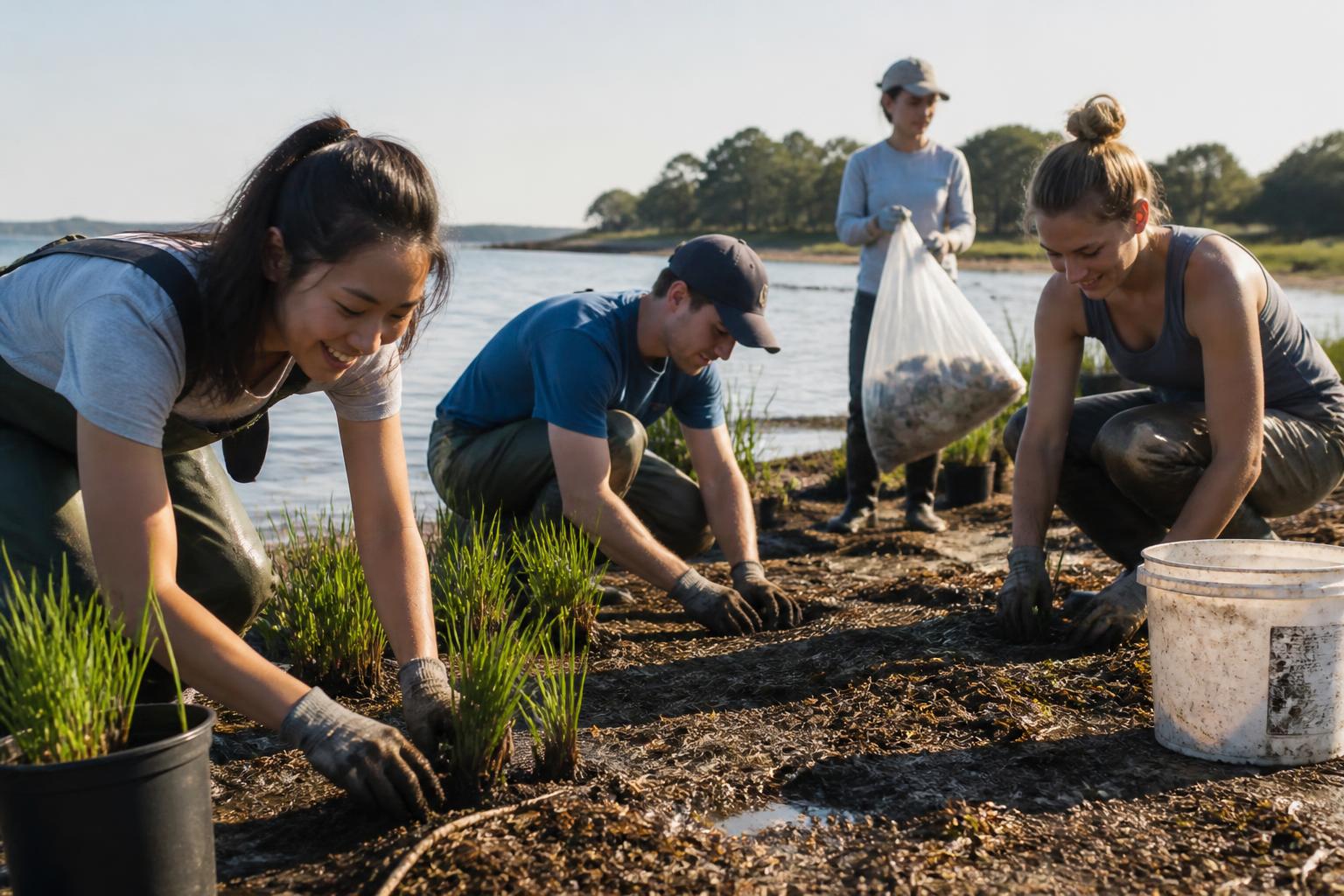
A strip of native grasses, shrubs, and trees between lawn and water catches runoff before it reaches the bay and holds the bank in place during storms.
Skip spring fertilizer near the water, sweep clippings off pavement, and let the grass grow taller. Most algae blooms start as nutrients on land.
Pump a septic tank every few years, fix leaks quickly, and never pour paint, oil, or pet waste into a storm drain — it empties here untreated.
No-wake speeds protect grass beds, nesting banks, and anyone tonging or crabbing nearby.
Restaurants and households can return shell to restoration programs, where it becomes the base for new reefs.
Fishing line, foam, and bottle caps do the most damage per ounce of anything on this shoreline. One bag per visit adds up.
Volunteer a morning
Shoreline cleanups, marsh grass plantings, and oyster cage tending happen through the growing season and need no experience.
Find a volunteer eventReport what you see
Log birds, water clarity, and debris. Citizen-science records are how slow changes in a bay this size become visible.
Submit observationsSupport the work
Restoration groups and the state fisheries program do the heavy lifting on reefs, grasses, and monitoring.
See Maryland DNR programsStart with the two pages that explain why the small stuff matters: what the bay has been, and what still lives in it.